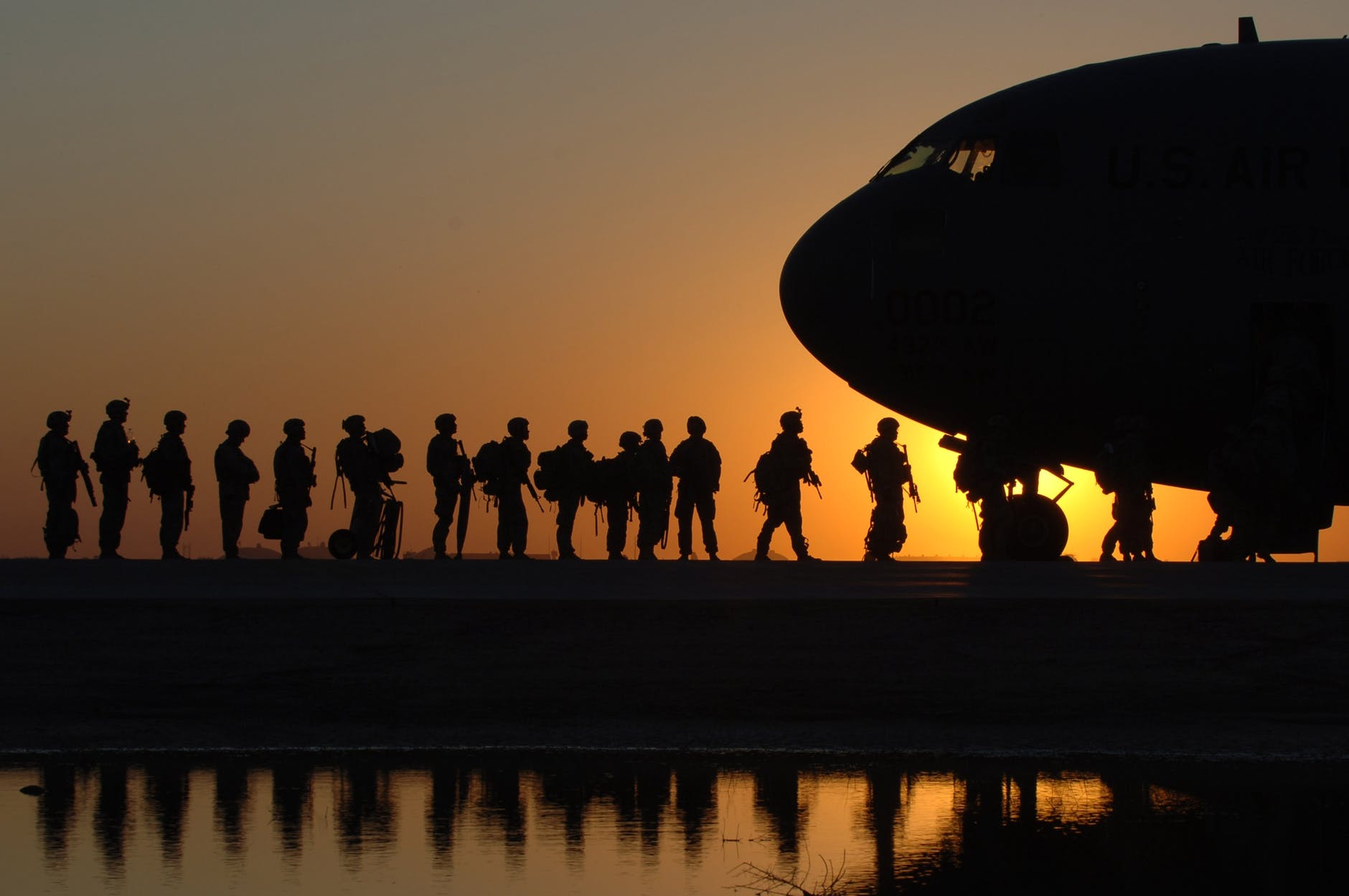
The likelihood is that there will be no miracles in Afghanistan and the forces of Afghan nationals we trained will not be able to hold back a surging Taliban.
Miracles do happen and maybe we’ll get lucky.
But just in case they don’t come through, this is a great opportunity for you to begin a series of talks with the American people about what went wrong and why it is time to move on.
As I said in an earlier blog, I agree with your decision to pull out.
Still, it will be painful to see the Taliban claim victory after 20 years of sustained efforts by us and our allies.
Thus, the American people needs to hear from you.
Hear from you as in you talking us through the pain of the loss.
There is much pain in that troubled land and there will be even more after we leave but there is much pain here in our nation, too, which addressing has long been deferred.
We need to leave Afghanistan because our resources are not limitless.
We need to hear that.
Twenty years we invested in that country and while we made our share of mistakes we were also undermined by many, including our ally Pakistan. Maybe that needs to be brought up, too.
But here at home our divisions are crippling us.
We need to hear that.
As you often said during the campaign, you want America to lead by the power of our example and not by the example of our power.
And so you have rightly committed to nation building.
You have already set the wheels in motion but the road ahead is filled with difficulty.
‘So, first of all, let me assert my firm belief that the only thing we have to fear is… fear itself… which paralyzes needed efforts to convert retreat into advance,’ FDR famously said in his inaugural address in 1933.
Much of what ails us now springs from a lack of trust in our ability to listen to each other. To listen and strive to understand.
I have no doubt that by your example, we may better be able to do so.
A weekly talk, say 15 minutes, with you addressing us all, Republicans and Democrats, will make a difference.
They greet outside a heavily guarded country home in an undisclosed location, each man flanked by his trusted interpreter.
The two men shake hands amicably. Clearly, they have been at the same site before.
Xi – Good to see you.
Putin – Have been looking forward to this, as always.
They turn and step into a short hallway at which end a large double door opens to reveal an ample room with padded chairs facing each other and smaller seats adjacent for the interpreters.
The men stride in and take their seats.
Two attendants are standing by an elegantly draped table covered with delicacies and an assortment of drinks.
Xi and Putin nod at the table attendants and that is their cue to exit the room, so no one else except the interpreters remains with them.
Putin – How is the family?
Xi – Very well, and yours?
Putin – Very well also. Thank you.
Xi – They send greetings.
Putin – And so does my family.
Xi – Thank you.
Putin – Congratulations on landing the rover in Mars.
Xi – Thank you. We are very proud of that accomplishment. It took a lot of planning and commitment.
Putin – The world got to see that nothing will stop you.
Xi – Exactly. And we are just getting started.
Putin – How is the Belt and Road initiative coming along?
Xi – Fabulously. We’re very pleased.
Putin – What does the Belt stand for?
Xi – What we’re putting around their necks to tighten if we have to.
Putin laughs.
Xi – We are generous, but we need to get something back for our investment.
Putin – Of course.
Xi – How was your meeting with Biden?
Putin – Productive. He listens. I think I can work with him.
Xi – I liked the way you spoke at the press conference following the meeting… denied any Russian involvement in cyberattacks on America, blaming them instead for attacking the rest of us.
Putin – Keeping it simple. I like the way you’re managing the Uyghur problem.
Xi – Eventually, everyone will realize we won’t change our minds. If the world wants cheap cotton and tomatoes and polysilicon for solar panels, Uyghur labor will help provide it.
Putin – Are you really trying to make them more Chinese… the Uyghurs?
Xi – Of course. But they’re hard headed. So we teach them the right way.
Putin – I’m impressed by how the rest of China doesn’t seem to mind.
Xi – There’s not much they can do about it, and it’s all about helping China get stronger. Chinese people get that.
Putin – Trump didn’t seem to mind. He wasn’t critical of the way you’ve handled the matter.
Xi – He understands. Have you heard from him?
Putin – Have not. He’s probably a little depressed… not having all that attention he so enjoyed.
Xi – Reminds me of what life would be like if I ever agreed to step down. I can better understand why Mao wanted to stay on until the end.
Putin – I feel the same way.
Xi – And so we will govern until our last breath.
Putin – Yes.
Xi – Tell me about Alexei Navalny. I heard Biden wanted you to ensure his safety.
Putin – Yes. I went and visited him in prison, even before my meeting with Biden. I had never met Navalny.
Xi – What was that like?
Putin – He has these romantic ideas about what Russians want. How Russians are desperate for freedom of expression. Makes you wonder if they ever talk to other Russians and not just to themselves.
Xi – Will he survive prison? Biden seemed worried about that.
Putin – I will do everything possible.
Xi – Of course. You think they’ll award him the Nobel Prize for peace, Navalny?
Putin – It’s a political move, but prize or no prize, he’ll stay right there in prison.
Xi – Does it worry you that he’s started something that could, possibly, force you out?
Putin – I’ve been in power since 1999 and Russians have come to appreciate the peace at home and the respect we now have from the rest of the world. They know it’s happened because of me.
Xi – I came to power in 2013 and I can also say that my people feel great pride in being respected all over the world. That had never happened before. The one thing that many keep criticizing us about is the lack of freedom. But it’s a misconception. A thinking error. We cannot have freedom without discipline. Discipline to make sure everyone is making their contribution to the great plan for the nation.
Putin – I agree. Americans keep talking about it as if you could have it without restrictions. We have freedom in Russia. You can start a business. You can go to university. You can travel. You can even organize politically but within certain limits.
Xi – The limits being that you remain in power.
They both laugh.
Xi – Same in China. Americans talk a lot about freedom but nowhere in the world do people shoot each other like they do. I find it incredible that people in Texas worship having the right to carry a gun, as if that were real freedom. If there were real freedom in that land, people wouldn’t be so paranoid.
Putin – Too much inequality breeds paranoia.
Xi – Their real freedom is their right to vote and elect who you want.
Xi has surprised himself with the last statement.
Xi – (an embarrassed look at Putin) I did say that, didn’t I?
Putin – (smiles) Yes, you did.
Xi – Well… eventually the Chinese will get to vote in free elections. But that is not the phase of development we’re in. It will take years… 30-40 years perhaps. For now we have to instill discipline in the people. And it takes time. How do you see America’s situation now?
Putin – They are in a period of confusion. The assault on the Capitol is a sign of it. There are deep fractures in the political matrix of the country that suggest opportunities that we could take advantage of… if we work together.
Xi – Interesting. Go on.
Putin – There are parts of the population in America that would prefer a system like ours. The other day, one of their generals, retired now, a Trump supporter, was quoted as saying ‘Why couldn’t we have a coup in America, like there was in Myanmar?’
Xi – Unheard of before Trump.
Putin – I’m sure the general wasn’t talking of a coup to empower proletarians…
Xi – Of course not.
Putin – … but to further empower plutocrats, the super wealthy… the ones who run the big businesses and get away with paying no taxes.
Xi – I won’t let that happen in China.
Putin – I liked the way you set limits on Jack Ma.
Xi – Right. No matter how much money you have, no matter how big your company is, you do not criticize the governing party. But you can do it in America. But please do continue giving me your opinion of America.
Putin – Biden wants to unite the country… but he can’t do it on his own. I don’t think so. He needs allies in the Republican party. The problem is that no one is stepping forward. Most of them are still thinking Trump is their best choice.
Xi – You don’t think so?
Putin – Trump is not centered enough as a person. He had his moment. But there are Republicans who could step forward and say, ‘We have to work with Biden, the country needs it.’ Until that happens, America will drift, working at cross purposes, wasting time and energy… and… giving us the opportunity to take advantage of their confusion.
Xi – What were you thinking of?
Putin – I have seen how effective you have been in suppressing the dissent in Hong Kong. I am confident you could do the same in Taiwan.
Putin and Xi look at each other as they pause.
Xi – I have thought about it. Americans are very vulnerable in the semiconductor industry, now so concentrated in Taiwan.
Putin – And it will take them years to catch up. So… it may be a great opportunity to act.
Xi – We have discussed it… the pros and cons.
Putin – I could help.
Xi – How so?
Putin – America will not go to war with me if I choose to invade and annex the Ukraine. What do they care?
Xi – Hmm… but such an action would distract them enough for us to… at the same time… invade and annex Taiwan.
Putin – Exactly… and by controlling the semiconductor market, you’ll have the world on its knees.
Xi – Indeed. Hmm. We have discussed it, the pros and cons.
Putin – My bet is… that America will not go to war with you over Taiwan, either. They’ll swallow their pride and kick themselves for not thinking ahead when they had time to do it.
Xi – Good point. America will feel demoralized, weakened.
Putin – And it will give me an opportunity to extend my influence over Eastern Europe.
Xi -What were you thinking of?
Putin – Poland, Hungary… Lithuania, Latvia, Estonia… maybe Finland. The European Union is weak, more so now since Brexit. And there’s no hiding that some prefer autocracies.
Xi – I see. We have discussed it, the pros and cons. We will be moving into Afghanistan, of course, once the Taliban take over after the Americans leave.
Putin – Good luck with that. We didn’t do well there.
Xi – Ah, but you didn’t have the Belt and Road initiative like we do.
Putin – (laughs) Tighten that belt around their necks if they don’t cooperate.
Xi – Exactly.
Putin – However… there’s always the risk… that Americans will pull together and decide to fight.
Xi – You think Biden will rally them for a fight?
Putin – There is that possibility…
Xi – If so… Americans may end up more united than ever.
Putin – They are creative… and can be very determined…
Xi – When they have a bold leader. You think Biden is that man?
Putin – Good question… I wonder… but he could be… he just could be.
Xi – We would be risking a lot if we chose to act as we have spoken…
Putin – True.
Xi – … and the rest of the world may not be forgiving.
Putin – But it is very tempting, isn’t it… since America is so divided.
Xi – Yes. But we cannot forget that our economy keeps growing… no one is growing like we are… we keep reaching more and more markets… and we may discover, as I suspect, that we can outcompete America… and not have to fire a single shot… and maybe that’s the real war we’re now fighting.
Putin – Very good point.
Xi –We Chinese are very disciplined. That’s our advantage.
Putin – (looking a bit worried) It’s a different challenge… I get that.
Xi – Do you think Russians can outcompete Americans?
Putin – Good question.
The two men pause for a moment.
Xi – What would you have to do?
Putin – I am not sure. But I worry that I will have to grant more freedom to increase competitiveness.
Xi – Which would threaten your position.
Putin – Yes.
Xi – You’re not alone… I worry about it, also.
Xi clasps his hands as he pauses for a moment.
Sometimes… I think it is inevitable.
Putin – What?
Xi – That sooner or later, Chinese will want more freedom… even demand it.
Putin – Repression works up to a point… but we can make it last.
Xi – Taking the long view… I do think that you and I… are only transitional leaders… leaders without the conviction that men are at their best when they can govern themselves.
Putin smiles to himself, pensively. And he thinks of Alexei Navalny.
Xi – Shall we eat something?
Putin – Yes.
The two men rise and walk to the table filled with delicacies.
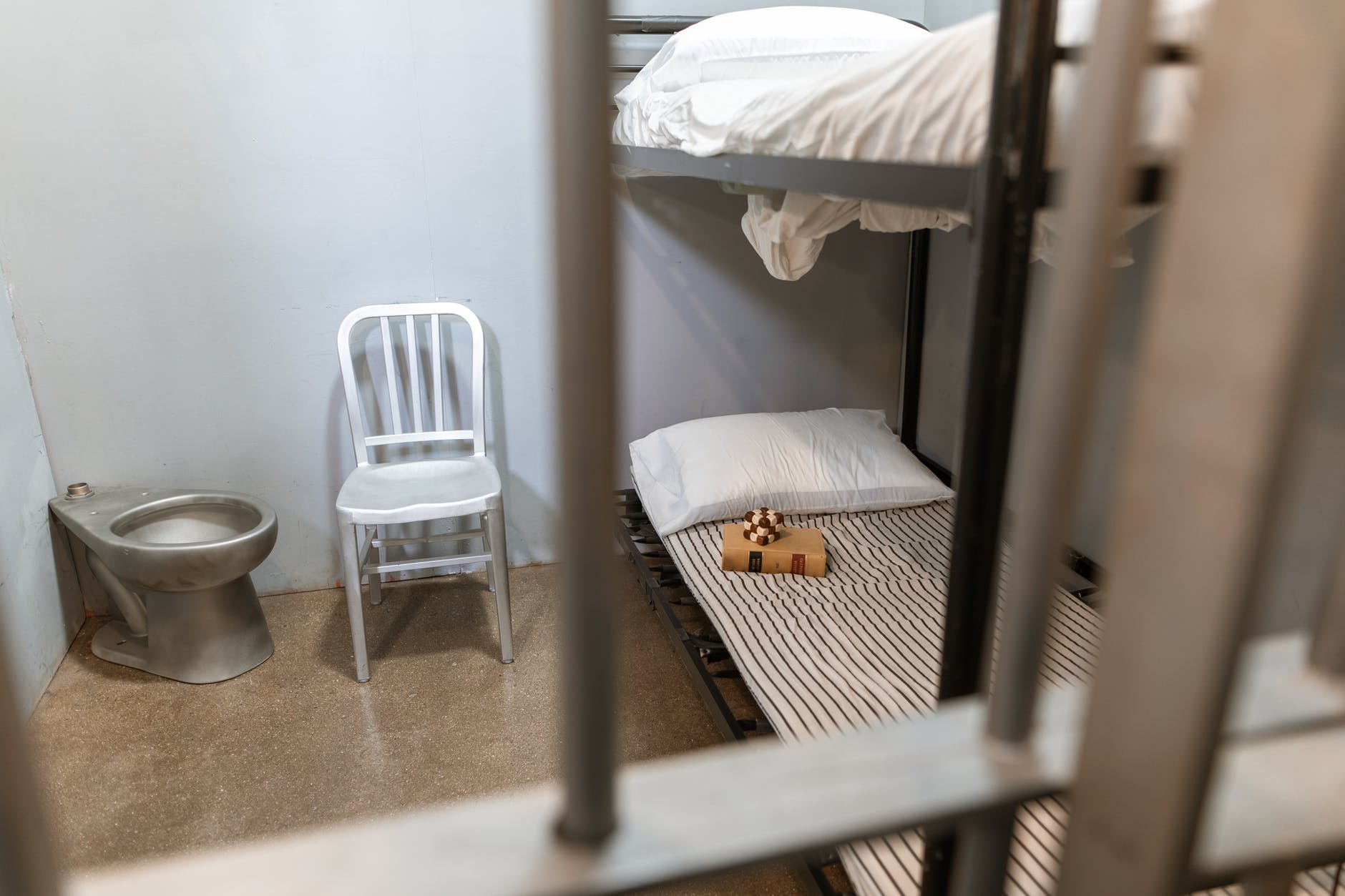
George Gascon, the newly elected District Attorney of Los Angeles, has run into an effort to recall him for his policy to review the lengthy sentences of thousands of people now in prison for violent crimes.
At the heart of the matter are gang enhancements, a judicial instrument that allows for adding prison time in criminal cases. If the offender was a gang member when he committed the crime, then that leads to additional time to serve beyond what the specific crime calls for.
Say that a person got 30 years for murder, the gang enhancement would then allow the judge to tack on another 5 years. Just because they were a gang member at the time.
I worked part time in the California prison system for 10 years – thru the end of 2016 – and it always struck me as supremely unfair to add this extra time.
Starting in 2006, the federal government got involved in improving the quality of care the inmates received in California because the state had a history of providing inferior services.
Inmates had brought a suit in federal court against the state. It was them who took the initiative.
Since then, the overall care has improved but still has a long way to go.
Designing and implementing an effective rehabilitation system for the inmate remains in its early stages. Inmates spend a lot of time doing nothing when they could be learning new skills and improving their ability to interact.
Given the enormous amount of money invested and the huge bureaucracy built, the people empowered to carry out the federal mandate have shown little imagination in putting together effective programs to assist the prisoner – psychologically and vocationally – in the quest to renew themselves.
At the same time, more effort needs to be put into prevention and into building better schools and creating more opportunities in the neighborhoods were offenders grow up.
That will take a whole different vision, but meanwhile, the gang enhancement acts as a means to defer what must be done. This is not acceptable and represents a grave injustice.
People fail for a variety of reasons, but I assure you that not one of those inmates set out in life wanting to be a failure.
Arriving in prison and spending time in it, is a statement of a failed life.
We all stumble at one point or another and we all need a helping hand along the way.
At the heart of the matter is inequality.
As a nation, we hold the sad distinction of being the country with the highest percentage of incarcerated people in the world.
It is tragic, isn’t it, to be a developed nation and to not have acknowledged that it is so much easier to simply add years of incarceration when we should be willing to explore options that will reconnect the offender to their humanity.
Our prison system is not a good example of what we can be as a nation.
Eliminating the gang enhancement is a small step in the direction of a more humane system and as such, Mr Gascon’s courageous efforts should be allowed time to work.
I have no doubt that, as he says, much vigilance would be exercised in determining who would qualify for the sentence reduction, mindful as he is of the possibility that a mistake could be made with grave consequences.
We need to trust a little as we invest in human beings.
We have to.
But just think of all of those men and women who, getting a chance for an earlier release, might contribute to enriching their communities and us all.
Think of all those men and women who, getting a chance for an earlier release, might smile and say, thank you fellow human beings, for seeing that hope was still alive in me.
Oscar Valdes. Oscarvaldes.net
The videos ‘Letters to A Shooter’ are available on YouTube.com
In the news report from United Press International, the family expressed ‘concerns about the indifference the victim encountered after the attack’.
And rightly so.
She was stabbed on Wednesday morning a little past 10 am according to a security camera that captured the scene. The victim was walking down the sidewalk when the man went up to her and started stabbing her.
The attacker, a 35 year old man, was arrested. He had a history of prior arrests for burglary and a homicide charge from 2016 that was dismissed in 2019 for lack of evidence.
The lady is recovering at San Francisco General Hospital.
It is not difficult to imagine how anyone of us can be either a victim or a witness.
If a victim and there are witnesses, it stands to reason that one would expect some assistance from those nearby.
But that is not assured, is it?
Judging from this attack, and similar ones reported recently, it is quite possible that one will be left to fend by oneself if assaulted, the witnesses preferring to not step in and put themselves at risk.
Understandable, right?
Sure. But is it the right thing to do?
There is always something a witness can do.
You may not wish to tackle the assailant and take the knife out of his hands, for fear you will turn into their victim, but anyone of us can certainly shout loudly to the attacker to stop hurting the other person.
Anyone of us can certainly attempt to summon others for help or try and pull the victim away from the attacker.
We don’t have to get in front of the knife, unless we feel we have to power to do so and disarm the person, but we owe something to each other, a minimum of civility, a minimum of consideration to not let the assailant keep doing harm to the person while undisturbed.
A witness ought to make some effort to intercede.
Some effort to distract the assailant, something to stop the cowardly act.
If we don’t, then how do we live with ourselves?
It can happen to anyone of us. Today, tomorrow, anytime.
Fear paralyzes the will and it may have paralyzed us before as I, myself, have been. But we cannot simply surrender without an effort.
We have to do something. Something. Something that says we are alive and will not let fear rule our lives.
On June 13th Robert Gates, who served as secretary of defense between 2006 and 2011 under Bush and Obama, wrote an article for the NYTs entitled ‘We Cannot Afford to Turn our Backs on Afghanistan.’
He speaks in favor of continued support for the existing government and for international funds to assist that nation.
He speaks of the strong likelihood that once America is gone, the Taliban will overrun the capital and eventually seek assistance from China.
So far, our share of human losses has come to over 2300 dead and more than 20000 wounded. And then there are the billions and billions poured into the effort, nearly a trillion now, not including associated costs for the care of veterans.
Is Mr Gates asking for another 5 years, maybe 10, of continued efforts on our part and NATO?
He acknowledges that the corruption of Afghan officials and members of their security forces undermined the massive international effort to change the course of that country.
When it was happening, we could have taken a strong position on not allowing such corruption.
We did not.
Mr Gates states that in the Fall of 2006 the president of Pakistan made a deal with the Taliban permitting them safe harbor in their land. Mind you, this was the president of a country where the US is one of the largest foreign direct investors, and for whom we are their largest export destination and to whom we provide significant assistance.
And still we could not keep them from supporting our enemy next door in Afghanistan.
There was a time to act and we now have to accept our losses.
If the Afghans could not refrain from undermining our efforts to help them build their nation, then we are not a good match.
We now need to invest our finite resources here at home, improving our infrastructure, our educational and health care systems and reducing inequality.
Mr Gates raises the specter that Al Qaeda will once again see an opportunity to come and bomb us.
Perhaps. But much has been learned in the last 20 years to help protect our skies and our borders.
Threats from abroad will persist, but the threats from within cannot be ignored. And those will rise if our inequalities and disagreements are not addressed.
I believe Mr Gates is right when he anticipates that once we leave, the Taliban will take full control of the country.
We should prepare for it.
It must include being able to clearly convey to the American people why we chose to leave and to assure them that we have taken all steps needed to provide for our safety.
We should avoid a repeat of the painful sights at our embassy in Saigon as we exited Vietnam, when local people who had assisted us rushed desperately toward the last helicopters lifting off pleading for a hand to help them up. Many were left behind.
It was a sad and hasty exit.
Surely Mr Biden watched as those scenes unfolded.
He has time to plan so we do better this time.
Bombing the Taliban as they encircle Kabul in their effort to seize it would come at the risk of injuring innocent people.
I hear that there are plans for Turkish and Pakistani troops to ensure the safety of the airport, with us paying the bill. But they won’t be able to hold off the encroaching Taliban. Turks and Pakistanis, too, will get in their choppers and planes and wave goodbye to that troubled land.
My hope is that Mr Biden, with his long history of dealing with difficult crises, will manage this one well.
But something is wrong in America and we have to fix it.
We should not retreat from the world but our resources are not limitless and we have to choose well.
We have lost Afghanistan and now we need to learn from it.
As we leave, China will step in. So be it. Maybe the intolerant and repressive Taliban will find kinship with the Chinese.
But something is wrong in America and we cannot just point the finger at the opposing party.
Something is wrong in America and there is fault in all of us.
Let us join together to fix it.
Let us join together to deal squarely with the enemy within.
When it begins to restrict the freedom of its citizens.
By that measure, China has already begun its slow decline.
Sure, the country remains a strong manufacturer of goods and they have made much progress in the production of electric vehicles, communication technology, artificial intelligence, renewable energy and space exploration.
But the suppression of the freedom of its citizens and the pervasive surveillance of their activities have started to slowly erode the minds of the Chinese. Slowly erode their spirit.
And the reduction in their ability to innovate will soon become clear.
Lying by the government is now the norm. That does something to the human spirit.
The large scale oppression of the Uyghurs in Xinjiang province is well documented but the Chinese government boldly denies the evidence.
If it is true that they are not guilty as charged, all it would take would be to allow a group of representatives from the rest of the world to visit the area, interview the people and see for themselves. But they won’t do it.
They won’t because their lies would be discovered.
A China that was truly confident would not object to such inspection.
If they had an open society then the matter would be aired.
If the intent in their treatment of Uyghurs was to reeducate them so they would become better Chinese, as they claim, there are certainly other ways to do that instead of secretly, which lead to practices that are coercive and inhumane.
That China can’t be honest with the world is a sign of the corruption at the top.
The corruption of a leadership for whom the preservation of power at all costs is the main objective. Never mind the full development of the Chinese citizen – an achievement only possible when freedom of expression is preserved while respecting the rights of others to do the same.
Xi Jinping has changed the laws so he can remain in power as long as he wants.
He gets to have freedom of expression. Not his people.
And so the entire Chinese leadership has reminded us how much they have in common with despots everywhere, whether in Syria, Russia, Egypt, Myanmar, Saudi Arabia, Belarus, Turkey, Nicaragua, Cuba, Venezuela.
Bullying behavior comes right along with massive lying.
In the South China Sea, the Chinese have made incursions into areas officially belonging to the Philippines while Duterte, their president, apparently intimidated by them, has chosen to look the other way.
When people in power are not confronted, their perverse instincts become more pronounced.
That is evident in China’s obsession to repossess Taiwan. The island went through many years of growing pains but blossomed into a democracy and now China wants it. China wants it, mind you, not to enhance it, but to diminish it, to strip it of the freedoms that have made it an economic powerhouse.
China wants to do with Taiwan what it is now doing with Hong Kong.
Meanwhile, businesses from everywhere in the world still race to have a presence in China because of the size of their markets and the profits that come with it.
And so that influx of foreign innovation helps China thrive. For now. But it will not last.
It cannot.
Take Russia for comparison. The enormous creative potential of that country has not been realized because of their system of governance. But in their case, there are now signs of change.
The tenacity and commitment of Alexei Navalny has been spreading through Russia and reminding them of how much they are giving up by consenting to live under the controlling influence of Vladimir Putin. And although Navalny is now in prison, the world increasingly recognizes him as the true bearer of the hopes of that nation.
There is no similar figure in China because the oppression has been so complete.
But soon enough one such figure will rise.
People who dare to take on the difficult challenges make a difference.
In Europe, Angela Merkel has been the person who came to symbolize the European Union’s possibilities. As she gets ready to step down as prime minister of the German nation, Emmanuel Macron in France will likely assume that role.
Meanwhile, from America, Joe Biden has risen to carry the vision and commitment to unite the Free World.
There is no question that China is a repressive dictatorship. Like there is no question of its ambitions to extend their influence far beyond its borders.
That China is helping other economies with their exports and imports, should not hide the fact that as a system, it is toxic to the human spirit.
China may be helping western companies get rich as their own companies do, but those riches are coming at a price.
And the price is the gradual undermining of the importance of freedom of expression.
The challenge of China to the free world is for us to address our inequalities.
They are saying to us, ‘so long as we make you rich through our markets, you will slowly value money more so than freedom, and you will become more like us.’
In answering the challenge, we must create better and fairer societies, and remind China of what is truly essential.
Our freedoms are fundamental to the preservation and enhancement of what it is to be human.
China is trampling on those.
Soon enough, it is our hope, a person or movement symbolizing resistance to their system of governance will emerge and begin the renewal the Chinese citizen deserves, so that talented nation can fully contribute to solving the problems of the world.
We will be wise to be able to recognize and support such person or movement.
Dr Aruna Khilanani, a psychoanalyst, was criticized by Yale University for expressing violent thoughts in a lecture she gave as part of grand rounds on April 6th. During the virtual lecture, she spoke of how hard it was to talk about racism to white people.
The doctor has a practice in New York that specializes on the subject.
I have not seen the videotape which viewing has now been restricted by Yale to their own community, after a writer had posted an audio version on Substack this last Friday.
My opinions are based on the article ‘A Psychiatrist Invited to Yale Spoke of Fantasies of Shooting White People,’ which appeared in the New York Times dated 6/6/2021.
Both the views of Yale University and of Dr Khilanani are presented in the article.
It is clear that Dr Khilanani is very angry about her experience with racism and she is very vocal about it.
The problem I see is that during her presentation, the line between therapist and sufferer was blurred.
In the lecture, as described in the article, we got to hear aspects of the sufferer’s pain and her fantasies of retaliation.
The doctor has never overstepped her boundaries in real life, which is why she felt the freedom to speak of her fantasies with great candor.
But such candor proved too unsettling for the audience. The attendees knew what the subject would be in advance. But the raw quality of the content proved most unpleasant.
I think the audience expected to hear how the profound pain of racism gets dealt with and neutralized. They expected to hear how such pain is defanged. They expected to hear how the analyst got to transform and soften it.
Instead they got a version of someone in the thick of her struggle.
Dr Khilanani gives the impression of having made a strong commitment to the study of racism and to finding ways to resolve it but she’s still working her way through.
Her path to resolution of such burden may not be yours or mine, for all of us have unique capabilities and may come up with different solutions, but I see her honesty as an important statement and as such must be heard and respected.
Yale University has their viewpoint, too, and it largely reflects the desire most people have that this problem we all face will find answers that are peaceful. We all want that.
But acknowledging the fullness of the pain is essential to get to such answers.
As the doctor says at one point, ‘My work is important. I stand by it. We need to heal in this country.’
At the end of the article a Yale professor is quoted as saying that, as a guest of the university, the doctor was free to speak on campus but that her views ‘must be soundly rejected.’
I disagree.
Dr Khilanani put it best, ‘my speaking metaphorically about my own anger… was a method for people to reflect on negative feelings… if you don’t, it will turn into a violent action.’
She has a point.
Oscar Valdes oscarvaldes.net
Also available on apple and google podcasts, anchor.fm, Spotify, buzzsprout.com and others.
Please see the videos Letters to A Shooter in YouTube.com
Mr Biden has committed to the US exiting that nation. It was not an easy decision. But after 20 years of occupation, I think it is the right decision to make.
What has made it so hard?
We went there in pursuit of Osama bin Laden and Al Qaeda. That has been accomplished.
An enormous commitment in manpower and investment in the Afghan people was made to attempt to rebuild that nation, at least the sectors open to it. But the Taliban has proved eminently resourceful and, with the support of Pakistan, has managed to undermine American and NATO allies’ effort.
We have been grieving for a long time the loss of our effectiveness in Afghanistan, grieving that we could not do more for their people.
But we now have to face up to the failure of our ambitions.
We wanted to persuade the potential Taliban supporter that democracy was a better option. We could not do so. For one reason or another, what the Taliban preached was able to prevail and so convert enough Afghans to their side, and thus continue bombing schools and centers of learning and killing their brothers and sisters. The Taliban were willing to sacrifice their lives in praise of their god while seeing us as the devil.
After all these years, Afghans remain a profoundly divided nation, at war with themselves and immersed in a mortal struggle for their identity and their affirmation as a people.
We cannot fight their fight.
Twenty years we were there and failed to fire up in them the drive to counter teachings that restrict the possibilities of human beings.
Twenty years we were there and failed to impact their culture in a meaningful way.
It was a very ambitious goal to begin with, and maybe it could have been approached differently, but we did the best we could given our own level of development.
Now we must retrench. Now we must look at ourselves squarely and examine what has gone unattended within.
Maybe we can continue to offer some measure of support and keep the Taliban from overrunning the government that we and our allies, at great cost in blood and treasure, have helped put in place.
I hope so.
But as we pull out we grieve the limits of our power.
And as we grieve we must confront the inequality within that has weakened us and lessened our effectiveness abroad.
Addressing such inequality will make us more effective when we again attempt to help other nations.
Had we been a fairer nation, had we been known for treating African Americans with respect, we probably would not have been a target for Osama bin Laden.
The Twin Towers were a symbol of White Power in America.
Had power not been so concentrated in a group perhaps such attack would have never happened.
The image we project as a nation matters. If we project an image that all ethnic groups in our land have a seat at the table when decisions of consequence are made, then the perceptions the world has of us will be different.
And so it is critical that we integrate all of our minorities. As we do, we will project an image that we are a reflection of the world in its entirety. That because groups from all over the earth have a place in our nation, then we are the world.
If all religions and languages, all colors and types can live and prosper in our land and we can still see ourselves as one nation, does that not tell the world that we are them and they are us?
Yes, it does.
And our effectiveness as mediators and resolvers of conflicts would be multiplied twenty-fold.
And we would be seen as a place where transformative choices occur – a laboratory for human interaction – from which others can learn just as we learn from them.
Are we up for the challenge?
I say we are.
We are because all it takes is courage, intelligence, civility, humanity and the ambition to power it through.
There is a strong desire to absolve ourselves of that judgment.
A strong tendency to want to spare ourselves.
There is no other group that has suffered like African Americans have throughout the years. Except for American Indians who were decimated.
Emancipation came in 1863 but it would take another 100 years – 1964 – before Lyndon Johnson pushed through, against great resistance, the Civil Rights Act prohibiting racial discrimination. Not surprisingly, discrimination against blacks persisted in both overt and covert ways.
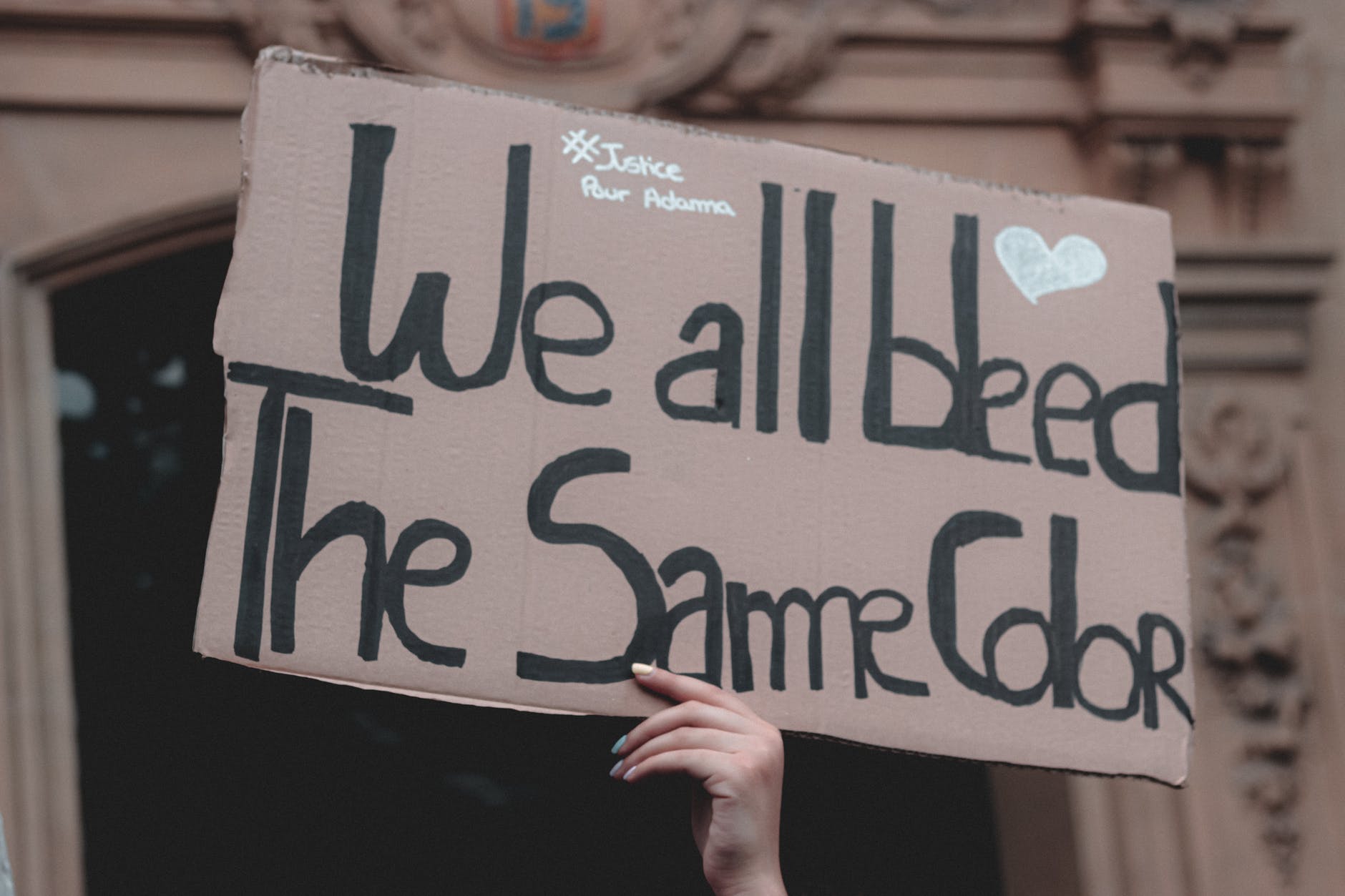
Is America racist?
We have been. And we still are in some ways.
What to do about it?
Put it on the table so we can examine such belief each and every day.
Not to do so retards both our personal and national growth.
Not to do so diminishes us.
Each one of us has to keep looking squarely at who we are, day in and day out and ask, Do I think myself better than African Americans? Do I think they are inferior? Do I think they don’t try hard enough? Do I think they are more violent? Do I think they are less intelligent?’
Am I racist?
If I share any of the above, even as a passing thought, then I have to work on it.
Because African Americans are neither inferior, nor lazy, nor more violent nor less intelligent.
But they have been marginalized for a long time.
Impoverished for a long time.
Undereducated for a long time.
All of which warps the essence of a person.
It is okay to say to ourselves, ‘I am racist… and I am committing to overcome it.’
It is not an unforgivable flaw to have racist thoughts.
And we don’t have to tell anyone.
We don’t have to confess.
So long as we keep working on it.
But we all have to do it.
Is America racist?
Yes, we are.
We are because we have gone along with policies that segregated African Americans. Because we have not objected loudly enough to their having poor educational and work opportunities. Because we have colluded, consciously or unconsciously, actively or passively, to keeping them down.
And what about our guilt?
If we have personally injured an African American acting from a racist belief – call it harm in the concrete – then we must apologize. And it will be up to them to forgive us or not.
If we have injured African Americans by not favoring measures that would assist their development – call it harm in the abstract – then we can work to reduce our guilt on our own, by questioning ourselves daily about our attitudes toward them and aiming to resolve them.
Forgiveness will be up to us and our consciences.
Advancement for African Americans has been happening gradually, over the years, thanks to the commitment of many of our more enlightened fellow citizens.
But opportunities need to grow faster.
As they do, we will see African Americans rise in every field of human endeavor, showing that they are just as capable as any other group on earth. Their numbers in the higher ranks of science and academia and industry and technology and business and all professions will swell. And their numbers in jails and prisons will decrease.
And we will feel proud of our civic and emotional growth.
Gradually, we will cease to be racist as a nation.
And we will be at peace,
And we will be one,
For we will have conquered ourselves.
But we have to keep working on it. Day in and day out.
Is America racist?
Yes, it is.
Am I racist?
Answer the above questions and make your judgment.
You may not be.
You may be one of our more evolved and mature citizens.
Each person has to square with their truth.
And so long as each one of us does, each one of us will be ceasing to be racist every single day.
As for me,
I will not confess,
But I will keep doing the work every day,
Day in and day out,
And feel damn good about the progress I’m making.
Oscar Valdes. Oscarvaldes.net
Also available in apple and google podcasts, Anchor.fm, Spotify, Buzzsprout.com and others.
Otherwise we leave unprocessed the yearnings and motivations that led his followers to the absurdity of the assault on the Capitol on January the 6th and make a repeat possible.
Otherwise we leave unprocessed the ongoing attachment by a significant sector of the Republican party to a man who lacks the ability to lead.
Mr Trump can stir and inspire many people but that does not make him a leader.
A leader is the person who can work with those they inspire to elevate them through a greater understanding of what ails the nation, not simply to play to their passions.
If the so called leader does not do that, then they are no more than a rabble rouser.
At the very core of what divides the nation today are immigration and inequality of opportunity.
I’ll take immigration.
There is a reluctance in the average Trump supporter to accept that immigration is essential to our path forward.
Without immigrants from all over the world – not just from England and Ireland and Germany and Scandinavia – we would not be where we are.
It is hard for the average Trump supporter to accept that.
Without immigrants we will not have the hard edge to answer China’s challenge.
Business loudly asks for them. ‘Give me your immigrants!’ the business community says loudly to the world. ‘If you want to work hard and make something of yourself, this is where you must come!’
The average Trump supporter, fearing they may lose standing in their own land, is reluctant to endorse that call.
Trump sensed that and said to himself, ‘this is my ticket to the White House. God knows that in all my years I’ve never done a thing for anyone in public life (a life mostly spent building hotels and golf courses for the rich and then filing timely bankruptcies) but I now see this great emotional need in Americans, so why not milk it?’
And people fell for it.
Many Trump supporters realize now that something is very wrong with the man they voted for but are having trouble moving past.
Immigration has much to do with it.
Immigration is not an easy subject. The rest of the world is also having trouble dealing with it.
But hold on to those antipathies and gradually nations will lose their competitive edge.
Hold on to those antipathies and you lose the stimulus for renewal.
To our credit, in spite of strong nativist sentiments, America has kept its doors open to immigrants.
Keep our doors open and we will have plenty of brain power to shape our future.
Close them and we will injure ourselves.
Trump could not lead because he could not build bridges. Not to other Americans, not to other nations, not to himself. Yes. Let me restate the latter. He could not build bridges to himself. If he had, he would have become an integrated man. But he did not. An integrated man is one who reflects and recognizes others may have better formed opinions than his. Trump could never do that. And thus his fundamental failing.
An integrated man would have accepted the loss in the election and asked his supporters to accept the results, examine the mistakes made and move past.
An integrated man would have accepted that the doctors in the Center for Disease Control knew more about viruses than he did. If he had, he would probably have won the election in spite of all his failings.
But he could not accept any of the above because he does not have an open dialogue with himself that can lead to reflection and to accepting that others may know more than him.
Doctors at the CDC spend all their time dealing with viruses, but Trump thought he knew more than them.
But the man could tweet. Oh, yes. And degrade others. And make stuff up. Plenty of it.
That so many Americans fell for his act and still do is something that needs to be digested.
Processed. Understood. So we can move on.
The whole nation has to process a profoundly maladjusted leader and why we chose him in 2016.
That is on all of us. That is on the entire nation.
If we do not do the processing required, then we will repeat the same mistakes.
We cannot afford that.
China, of course, is counting on us not doing our homework. And so are all our detractors in the rest of the world.