Leaving Afghanistan. Finding New Power

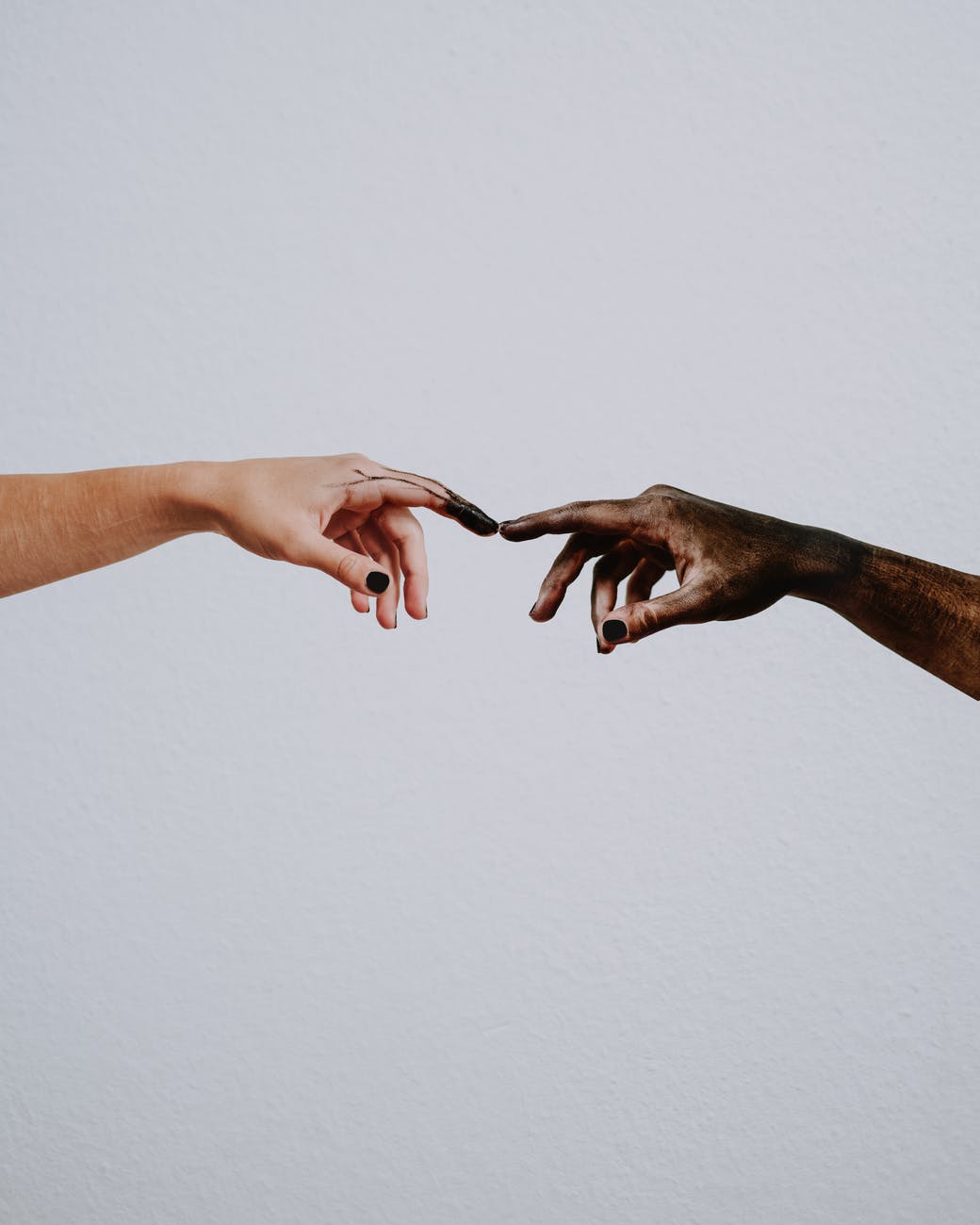
Photo by RF._.studio on Pexels.com

Mr Biden has committed to the US exiting that nation. It was not an easy decision. But after 20 years of occupation, I think it is the right decision to make.

What has made it so hard?

We went there in pursuit of Osama bin Laden and Al Qaeda. That has been accomplished.

An enormous commitment in manpower and investment in the Afghan people was made to attempt to rebuild that nation, at least the sectors open to it. But the Taliban has proved eminently resourceful and, with the support of Pakistan, has managed to undermine American and NATO allies’ effort.

We have been grieving for a long time the loss of our effectiveness in Afghanistan, grieving that we could not do more for their people.

But we now have to face up to the failure of our ambitions.

We wanted to persuade the potential Taliban supporter that democracy was a better option. We could not do so. For one reason or another, what the Taliban preached was able to prevail and so convert enough Afghans to their side, and thus continue bombing schools and centers of learning and killing their brothers and sisters. The Taliban were willing to sacrifice their lives in praise of their god while seeing us as the devil.

After all these years, Afghans remain a profoundly divided nation, at war with themselves and immersed in a mortal struggle for their identity and their affirmation as a people.

We cannot fight their fight.

Twenty years we were there and failed to fire up in them the drive to counter teachings that restrict the possibilities of human beings.  

Twenty years we were there and failed to impact their culture in a meaningful way.

It was a very ambitious goal to begin with, and maybe it could have been approached differently, but we did the best we could given our own level of development. 

Now we must retrench. Now we must look at ourselves squarely and examine what has gone unattended within.

Maybe we can continue to offer some measure of support and keep the Taliban from overrunning the government that we and our allies, at great cost in blood and treasure, have helped put in place.

I hope so. 

But as we pull out we grieve the limits of our power. 

And as we grieve we must confront the inequality within that has weakened us and lessened our effectiveness abroad. 

Addressing such inequality will make us more effective when we again attempt to help other nations. 

Had we been a fairer nation, had we been known for treating African Americans with respect, we probably would not have been a target for Osama bin Laden.

The Twin Towers were a symbol of White Power in America. 

Had power not been so concentrated in a group perhaps such attack would have never happened.

The image we project as a nation matters. If we project an image that all ethnic groups in our land have a seat at the table when decisions of consequence are made, then the perceptions the world has of us will be different.

And so it is critical that we integrate all of our minorities. As we do, we will project an image that we are a reflection of the world in its entirety. That because groups from all over the earth have a place in our nation, then we are the world.

If all religions and languages, all colors and types can live and prosper in our land and we can still see ourselves as one nation, does that not tell the world that we are them and they are us?

Yes, it does.

And our effectiveness as mediators and resolvers of conflicts would be multiplied twenty-fold.

And we would be seen as a place where transformative choices occur – a laboratory for human interaction – from which others can learn just as we learn from them. 

Are we up for the challenge?

I say we are.

We are because all it takes is courage, intelligence, civility, humanity and the ambition to power it through.

And we have all of it.

Oscar Valdes.   Oscarvaldes.net

Digesting Trump. Squaring with Immigration

Photo by William Fortunato on Pexels.com

First of all, digest Mr Trump the nation must. 

Digest him as in understanding what drives him.  

Otherwise we leave unprocessed the yearnings and motivations that led his followers to the absurdity of the assault on the Capitol on January the 6th and make a repeat possible.

Otherwise we leave unprocessed the ongoing attachment by a significant sector of the Republican party to a man who lacks the ability to lead.

Mr Trump can stir and inspire many people but that does not make him a leader. 

A leader is the person who can work with those they inspire to elevate them through a greater understanding of what ails the nation, not simply to play to their passions. 

If the so called leader does not do that, then they are no more than a rabble rouser. 

At the very core of what divides the nation today are immigration and inequality of opportunity.

I’ll take immigration. 

There is a reluctance in the average Trump supporter to accept that immigration is essential to our path forward.

Without immigrants from all over the world – not just from England and Ireland and Germany and Scandinavia – we would not be where we are.

It is hard for the average Trump supporter to accept that.

Without immigrants we will not have the hard edge to answer China’s challenge.

Business loudly asks for them. ‘Give me your immigrants!’ the business community says loudly to the world. ‘If you want to work hard and make something of yourself, this is where you must come!’

The average Trump supporter, fearing they may lose standing in their own land, is reluctant to endorse that call. 

Trump sensed that and said to himself, ‘this is my ticket to the White House. God knows that in all my years I’ve never done a thing for anyone in public life (a life mostly spent building hotels and golf courses for the rich and then filing timely bankruptcies) but I now see this great emotional need in Americans, so why not milk it?’ 

And people fell for it. 

Many Trump supporters realize now that something is very wrong with the man they voted for but are having trouble moving past. 

Immigration has much to do with it.

Immigration is not an easy subject. The rest of the world is also having trouble dealing with it. 

But hold on to those antipathies and gradually nations will lose their competitive edge.

Hold on to those antipathies and you lose the stimulus for renewal.

To our credit, in spite of strong nativist sentiments, America has kept its doors open to immigrants. 

Immigrants equate renewal. Renewal equates progress. 

Keep our doors open and we will have plenty of brain power to shape our future.

Close them and we will injure ourselves.

Trump could not lead because he could not build bridges. Not to other Americans, not to other nations, not to himself. Yes. Let me restate the latter. He could not build bridges to himself. If he had, he would have become an integrated man. But he did not. An integrated man is one who reflects and recognizes others may have better formed opinions than his. Trump could never do that. And thus his fundamental failing. 

An integrated man would have accepted the loss in the election and asked his supporters to accept the results, examine the mistakes made and move past.

An integrated man would have accepted that the doctors in the Center for Disease Control knew more about viruses than he did. If he had, he would probably have won the election in spite of all his failings. 

But he could not accept any of the above because he does not have an open dialogue with himself that can lead to reflection and to accepting that others may know more than him. 

Doctors at the CDC spend all their time dealing with viruses, but Trump thought he knew more than them.

But the man could tweet. Oh, yes. And degrade others. And make stuff up. Plenty of it. 

That so many Americans fell for his act and still do is something that needs to be digested. 

Processed. Understood. So we can move on.

The whole nation has to process a profoundly maladjusted leader and why we chose him in 2016.

That is on all of us. That is on the entire nation.

If we do not do the processing required, then we will repeat the same mistakes.

We cannot afford that.

China, of course, is counting on us not doing our homework. And so are all our detractors in the rest of the world.

Oscar Valdes. Oscarvaldes.net

Lukashenko, the Belarusian Dictator, Talks to Roman Protasevich

Photo by Artem Podrez on Pexels.com

Aleksandr Lukashenko leads Protasevich to a private room, just the two of them, so he can have a face to face talk with the activist. They sit across each other, the moment tense. 

‘I forced your plane down… to have you make the confessions that you started mass unrest here in Minsk. I could do it and I did… but that doesn’t mean that I don’t admire you.’

Protasevich is surprised by the statement.

‘Yes, admire you,’ says Lukashenko. 

‘I admire… that when you were only 17 you started being an activist against my regime. At that young age, you had a strong belief that Belarus should be a free nation… not under the influence of Putin.’

Protasevich is surprised by Lukashenko’s candor. He lowers his head, not sure what to say. He now looks up at Lukashenko. ‘Do you want to stay under Putin’s influence?’

Lukashenko looks off, uncertain. 

‘I’ve not felt free as a leader… not felt like I could do what was right for Belarus.’

‘Why not?’ presses Protasevich. ‘What is stopping you?’

‘I’ve made mistakes… have not had advisers with independent minds… but that’s my fault.’

Sensing an opening, Protasevich leans forward, and as he eyes Lukashenko says, ‘You feel trapped?’

Lukashenko stares back at him.

‘I don’t even know why I’m having this conversation with you. I don’t have to. Do you understand?’

Lukashenko’s cold stare sends a wave of fear through Protasevich, but the activist holds his gaze. 

‘Maybe I do feel trapped…’ continues Lukashenko, ‘no way out for me… maybe life in a dacha near Moscow while Putin is alive. After that, who knows what.’

‘You could…’ begins Protasevich, tentatively… ‘decide to change course…’

Lukashenko frowns.

‘I mean…’ continues Protasevich, making bold, ‘you could ask to meet with the opposition’s representatives… and begin talks for a transition to democracy.’

Lukashenko pauses, reflecting, then leans forward with a hint of interest. ‘I’ve thought about it.’

Protasevich pushes on, ‘You worried about what Putin might say… or do?’

‘I suppose…’ answers Lukashenko.

‘What if… we guaranteed your safety.’

Lukashenko laughs as he sits back. ‘You can’t do that. Putin has long tentacles.’

The men stare at each other for a moment.

‘No… there is another way…’ restarts Lukashenko. ‘What I’d like to do is send word to the resistance… that I will begin to be more lenient… little by little… and maybe… in two years… we can have another election… but this next time… whatever happens, happens… I will not interfere… and if I lose, I’ll step down… but I’d like to have assurances that I won’t be sent to prison.’

Protasevich sits back.

‘What will Putin say?’

‘I’ll have to deal with him. There are risks, of course. But let that be my contribution to the process.’

Protasevich clasps his hands in front of him, conscious that he is witnessing a special moment.

‘I would like to speak only to you… only you will be my contact with the opposition,’ says Lukashenko.

Protasevich nods, intrigued by why he’s been chosen.

Lukashenko reads him accurately and says, ‘Why you? Because you have shown uncommon courage… and you love Belarus.’

Protasevich looks down at the ground, then, ‘Why now?’

Lukashenko stares at his strong hands as he pauses. ‘I don’t want to go down in history as Putin’s puppet.’

Then he extends his hand to Protasevich. ‘Do you accept?’

‘I do.’

The two men shake hands.

‘A security force will drive you and your girlfriend to the border with Lithuania tomorrow morning. We’ll be in touch. This conversation is to be kept secret, to be shared only with your top people. Or I will deny it.’

‘I understand,’ replies Protasevich.

Lukashenko rises and exits.

It could happen, couldn’t? Maybe it has. Maybe it will. We can only hope.

Oscar valdes     oscarvaldes.net

Available in apple and google podcasts, spotify, anchor.fm, buzzsprout.com and others.

Andrew Brown Jr, Age 42, is Shot Dead

Photo by fotografierende on Pexels.com

On the morning of April 21st, a police team from Pasquotank, North Carolina, is sent to ‘execute search and arrest warrants’ on Andrew Brown Jr, who had a history of prior convictions and resisting arrest. 

They find him at his home, in his car, having just returned from a morning drive.

Mr Brown resists the arrest, drives off instead and as he does the officers fire 13 shots into his car, one hitting him in the back of the head and wounding him fatally, after which he crashes into a tree 50 yards from his house.

Mr Brown should not have resisted arrest. 

He should have stepped out of his car and surrendered.

There were several officers surrounding him with plenty of weapons to fire away.

What’s wrong with this picture?

There is no mention in the article that anyone was in danger from Mr Brown’s actions.

No mention of what his convictions had been, what kind of crimes had Mr Brown committed to warrant the size of the police force sent out to arrest him.

He was still living in his home, even going out for a ride that morning and then returning.

He wasn’t racing out of State to avoid capture, so just what were the infractions?

Probably minor.

Still, he was in violation of the law and he should have surrendered.

But he didn’t.

What could possibly be wrong with a man who is so defiant with the police, recklessly so?

Something was wrong. Something that needed a different kind of intervention than a posse of cops armed to the hilt and ready to shoot the person.

Answer anyone?

Then here it is.

Send in two social workers from the county, a man and a woman, to knock on his door.

‘G’morning, Mr Brown. We’re social workers with Pasquotank County and we’ve come to chat with you for a moment. May we come in?’

No, he wouldn’t let them in but he was willing to step out into the porch.

‘What’s this about?’ asks Mr Brown, warily.

‘We know you have a history of resisting arrest and there’s a warrant out for you. Look, resisting arrest can get you into a whole lot of trouble. What’s the problem?’

‘Things are not going well for me…’ replies Mr Brown.

‘So you need help… maybe we can help. We’ll do what we can, but we want to stress that resisting arrest can get you killed. Do you want to live?’

Mr Brown smiles as he drops his head. Maybe he’s not sure he wants to live.

‘Let me restate that,’ says one of the social workers, ‘resisting arrest will get you killed. Is it worth it?’

Mr Brown shakes his head slowly.

‘Then let us help you. How about if you turn yourself in? We’ll do what we can to get some financial and mental health assistance for your family while you’re in custody,’ says one social worker.

‘And we’re willing to work with you to keep you from getting in trouble again, whatever it is that you did,’ says the other.

‘You’ll do that?’ asks Mr Brown, a hint of relief. 

‘Yes. We’ll do the best we can.’

‘I… I have trouble learning… ‘ begins Mr Brown, ‘I have trouble thinking… I don’t make good decisions… but I’m not a bad person… you get what I mean?’

‘We do,’ say the two social workers in unison.

‘And on top of that I haven’t been working. I get so angry sometimes. I can’t provide for my family.’

‘Let us help you,’ replies the lady social worker. ‘One step at a time.’

‘Will you be willing to come in with us today?’ asks the other social worker.

‘Turn myself in?’ says Mr Brown.

‘Yes.’

Mr Brown lifts his head and swallows hard. He closes his eyes for a moment… then he nods in assent. 

‘It’s your decision Mr Brown. We’re not with the police. It’s up to you.’

‘I know. Thank you for coming out. Let me go in and tell my family.’

Dear reader, think about it.

Could this have been the case for Andrew Brown Jr., age 42 in Pasquotank county, North Carolina? 

Yes.

And if so, he would be alive today. Alive to learn to be a better man, a better father, a better citizen.

Alive.

Sad, isn’t it? How easy it is for guns to take the place of words.

And will the African American leadership in our nation please send out a call to all African Americans to not resist arrest, not run from the police? Please. 

Just so we can give words a chance.

Oscar Valdes.   Oscarvaldes.net

Declaration of The American Immigrant

Photo by Karolina Grabowska on Pexels.com

We come to this country to embrace our possibilities,

To expand our minds, our hearts and productive capacities

As we strive for self reliance.

To those who drafted the laws that made our entry possible

We say thank you,

To those who have built this country

We say thank you and here commit to continue the task,

To those who have fought for and defended this nation

We say thank you and here commit to do the same.

We will honor you and your efforts through our work and determination to succeed.

As we do, we vow to be generous to those who are less able for nature does not endow us equally.

We will fight to be the best we can be for as we do

We earn our freedom,

The power to bow to no one

And the privilege of lighting the way for others to follow.

Long live the freedoms of this land

The right to dissent and challenge authority,

And the opportunity to pursue our uniqueness. 

Thank you America

Oscar Valdes  Oscarvaldes.net

US Technology versus China. How Much Should We Make Available for Them to Buy?

Photo by Daniel Bendig on Pexels.com

Nothing that they cannot now produce themselves. 

China’s behavior has made it clear, through their aggressive behavior in the South China Sea and their policy of economic conquest implicit in the Belt and Road initiative, that they are set on a path to become the dominant power in the world. 

They have enormous technological capacity, a strong commitment to further it and are equal to us in drive and inventiveness. 

But they still don’t have America’s edge in many fields. 

Given that China has shown its colors, why assist them in their quest for dominance?

China’s push is much determined by the bargain they have made with their people. ‘In exchange for our quick rise,’ they have said to their citizens, ‘you will give up free speech and consent to the Communist Party’s detailed surveillance of your behavior.’

The party knows that those restrictions cannot last forever and feels compelled to show results to justify the repression. That is the pressure they’re under.

Why should America assist them with their plans?

It is reasonable to assume, that China will develop what it needs technologically on their own but that will take time. 

Time that we need to further our own advantages. 

Time to repair the social and economic infrastructure that has kept us from providing equal opportunities to our citizens. 

We need whatever edge we now have in the various fields to make our citizens stronger and better educated. 

Competition with China will last decades. We need sharp minds and able bodies who are convinced that our system is fair, respectful of human rights and worth fighting for. 

We need time to make clear what the American edge is.

As we produce better citizens we will likely keep that edge over China and dissuade the rest of the world from moving to their side. 

There is no guarantee that will happen, so we must work hard for it. 

The present administration, with its commitment to comprehensive infrastructure building, understands this need. 

There will be those, however, who in the interest of profits, will make the case for accommodating with China, that is to supply them with what they wish. But those interests are shortsighted, will undermine our resolve and give China the advantage.

Competition with China is here to stay and it can help us become a better nation. 

For that we’ll need inspiring leadership, bipartisan support and lots of gumption.

Oscar Valdes

Oscarvaldes.net

General Hlaing and The Prisoner. Myanmar

Eighteen people had been killed the day before as government forces shot into the crowds of civil disobedience participants. And yet the protest movement did not yield.

Nyan had been arrested in the street as he withdrew from the charging police and had stopped to aid a fallen protester.

He was now sitting alone in a windowless cell, his back against the wall, face in his hands. Nyan was a civil engineer in a government office that built bridges throughout Burma. He was 39 years old, married and the father of two.

There was a sink and a toilet, no bed, and a single light bulb overhead. He had been fed once – a piece of bread and a small portion of rice – in the twelve hours he had been detained.

A cut on his forehead where he had been struck hard by a wooden club was swollen but had stopped bleeding.

He reviewed in his mind why he had done what he had. At first, his wife, a pharmacist, had hesitated to support him, but he had insisted. The nation needed everyone, he had argued. The military should not get away with shamelessly disregarding the results of an election where the National League for Democracy had won a clear majority and then put their leader, Aung San Suu Ky, under house arrest. Freedom had a cost and it was for the citizens to pay it.

‘If something happens to me, the children have you,’ he had said to his wife, Shway.

‘I have a bad feeling about this, Nyan, I don’t know why.’

‘Be brave, my love, we want the best for our children, don’t we?’

They held each other in a tight embrace as their children, 3 and 2 years old, stood by, anxiously.

The young one started to cry but the older one put her arm around him.

‘Nyan, you’ve protested several times already,’ said Shway. ‘Let others do their part too.’

 He drew back to look at her and said, ‘They’re counting on me… I can’t let them down.’

She looked him in the eye, uncertain she would be able to see him again, and nodded.

‘I understand,’ she said softly. ‘Go, then… but first embrace your children.’

He turned and knelt before them, then held them both in a tight embrace.

‘I’ll be back,’ he said. Then he rose and walked out.

Nyan raised his head and rested it against the wall behind. His arms and back ached from the blows he’d received but he didn’t think anything was broken. He knew that some people had been killed in the protests but didn’t know the exact number.

Now he heard the clank of metal on metal as the door was being unlocked.

As it opened two soldiers entered, one with a machine gun in his arm pointed at him, another with a can from where he sprayed a mist into the stale air of the cell. It smelled of fresh linen.

The two soldiers stood before him but said nothing. Then an officer, dressed in a spiffy uniform decorated with medals, stepped in. He was wearing his military cap.

Nyan was surprised. He recognized the man immediately. It was General Hlaing, leader of the military junta that had staged the coup.

The general stopped right in front of Nyan.

The two men locked eyes.

‘We met before,’ said the general.

Nyan remembered. Two years before, the General had made a surprise visit to the Ministry where Nyan worked and the two men had shook hands.

‘Why are you doing this?’ asked the General.

‘In defense of our freedom,’ said Nyan. His voice was firm but there was no anger in his words.

‘You have chosen to jeopardize everything you have, for what?’ replied the General. ‘To be part of a rabble, part of a mob with complete disregard for what the military have done for the nation?’

Nyan looked down for a moment. When he answered he looked the General directly.

‘We are fighting for the right to choose our leaders, the right to express our ideas and let others express theirs. That right should be respected at all times.’

The General listened calmly. ‘My father was a civil engineer too, in the same Ministry you know work.’

Nyan was quiet.

‘There was fraud in the election in November,’ continued the General. ‘That’s why we’ve had to intervene, to protect people’s rights.’

‘There’s a parallel, isn’t there?’ returned Nyan, ‘between what you’ve been saying since your party lost by a wide margin, and what happened in the United States with Mr Trump. He, too, from the start, kept talking of fraud. I wonder if he was your inspiration.’

The soldier with the spray can stepped forward. ‘Do not be disrespectful,’ he said to Nyan, menacingly.

But the General scowled at the soldier and the man quickly backed off.

‘In America, there are safeguards against what you’re now doing,’ said Nyan, ‘not here in Burma. Here, our votes are not respected and we have to put up with your desires to be king, and for your son and daughter to have large business interests that could only be had because of your influence.’

The General showed no emotion but he was now steaming inside. How dare this insignificant prisoner, whose life he held in his hands, speak to him with such insolence.

The General closed his eyes. Whenever he felt like striking out in anger, he closed his eyes and that helped him regain his composure. He liked being composed, or the appearance of it, especially when he had to be ruthless as he was tempted to be right at that moment. It was up to him to do what he wanted with Nyan. Up to him to have him disappear if he chose to. Just like that, for he, General Hlaing, was now the undisputed ruler of Myanmar. He had staged the coup on February 1st and the next day he had created the State Administration Council and put himself in charge.

It was not the first election that the military’s party had lost. They had lost, too, in 2015, when long time dissident Suu Kyi had risen to power even though the military refused to allow her to have the title of president. And then the following year, in October 2016, as if to establish clearly who was really in charge, General Hlaing’s troops had violently pushed the Rohingya Muslim minority out of Rakhine State near Bangladesh where many sought refuge. The actions had been deemed genocidal in intent by most of the world. But the uproar had passed. Everything passed. The world would soon forget about his small nation again, leaving him free to rule as he wished.

Myanmar was his. He owned it. It was his to do what he wanted when he wanted. And he was not about to cede that privilege to people whose brains were addled with notions of democracy.

The world belonged to men of power and he was one of them. He and Xi Jinping and Putin and Duterte and Kim Jong Un and El Sisi, Assad and the Saudis too.

He was sure that China would be supportive of his coup. In fact, all of them would.

When he opened his eyes, the General asked his escort to leave the cell.

The two soldiers were hesitant. Nyan was not cuffed or tied down to anything.

‘Leave,’ the General repeated.

The two men exited.

The General took off his cap and brushed back his hair. He had a pistol strapped to his side. He was a good shot, he reminded himself. If Nyan made the slightest move he would put a bullet in his head.

‘I like power… always have… which is why I went into the military. It makes me feel alive… I’m 64 years old and in good health… I could live another 30 years… so why not do it while I’m exercising power? Why share the cake if I can have it all? Suu Kyi may win elections but I can impose my will. There’s something sublimely intoxicating about that.’

‘It doesn’t bother you that the nation as a whole is damaged by having one man in power doing as he wishes?’ asked Nyan.

‘Damaged how?’

‘Just like we need physical exertion to develop strong bodies, we need political exertion to grow our minds and learn to repair social injustices, injustices to which we’re all so prone simply because we’re human,’ replied Nyan. ‘We need political discourse to expand and affirm ourselves and so enrich the country.’

The General moved his head slightly but there was no change in his expression.

‘There are so many countries where democracy leads only to paralysis,’ said the General, ‘which is why China has opted for autocracy. Look at how well they’re doing. Their example is teaching us all the right way to do things. Soon they will surpass America in every way.’

Nyan folded his arms as he kept looking up at the General.

‘Your forces have killed people… shot and beat them… does it not bother you? Can you sleep at night… knowing that because of you there will be children without fathers or mothers, or brothers or sisters? Have you not thought of all that you’ve had, all the privilege you’ve enjoyed all of your life? The protests are not meant to strip you of your place in the military, but to insist that you respect the will of the people, that you protect the results of elections. The protests are meant to curb your excesses, your vanity, your grandiosity, your disregard for the rest of us. The riches you’ve accumulated, are they not enough for you?’

The General had not moved at all since he planted himself in front of Nyan. Now he took a small step back. He put his cap back on.

‘The weapons you use to repress us are all very modern,’ resumed Nyan. ‘The guns, the cameras, the cyber weapons. And the new armored vehicles cruising our streets were made in Israel… we can tell. So they found a way to circumvent American sanctions.’

‘I want the best for Burma,’ said the General.

‘You do not want the best for Burma… you want the best for you and the military,’ returned Nyan, ‘and you’re willing to brutalize us to achieve your aims.’

The two men looked at each other for a moment.’

Then Nyan asked, ‘What will happen to me?’

‘I will give you two options… leave the country… or stay and cease to be political.’

Nyan hung his head.

But he didn’t need much time to deliberate. At 39 years old he had a clear idea of what to do with his life. He believed in the protests. He believed that, eventually, enough of the men who were now siding with General Hlaing would realize that the blood in their hands was the blood of their brothers and sisters, their fathers and mothers, and confronting their fears would choose to turn against the General. Nyan believed that the spirit of revolt against injustice that filled every Burmese when they set out to participate in a protest, would one day convince their oppressors that they were on the wrong side of history and would then join the fight against tyranny.

The General rested his right hand on the handle of his side arm. ‘You can take your time before giving me a reply.’

‘I don’t need more time,’ said Nyan, ‘I reject both options… and choose to fight you.’

The General didn’t change expression at all. But he, too, had made up his mind. The struggle for the soul of Myanmar would rage on.

He moved to exit the cell but stopped.

Without turning back to look at Nyan he added, ‘You think the world will come for you?’

‘I have no illusions,’ replied Nyan.

‘Then why throw your life away?’

‘I’m not throwing my life away… I love my people.’

The General paused for an instant… then… ‘yes… love,’ he said softly, almost to himself.

And he exited the cell.

The door slammed shut behind him.

Oscarvaldes.net